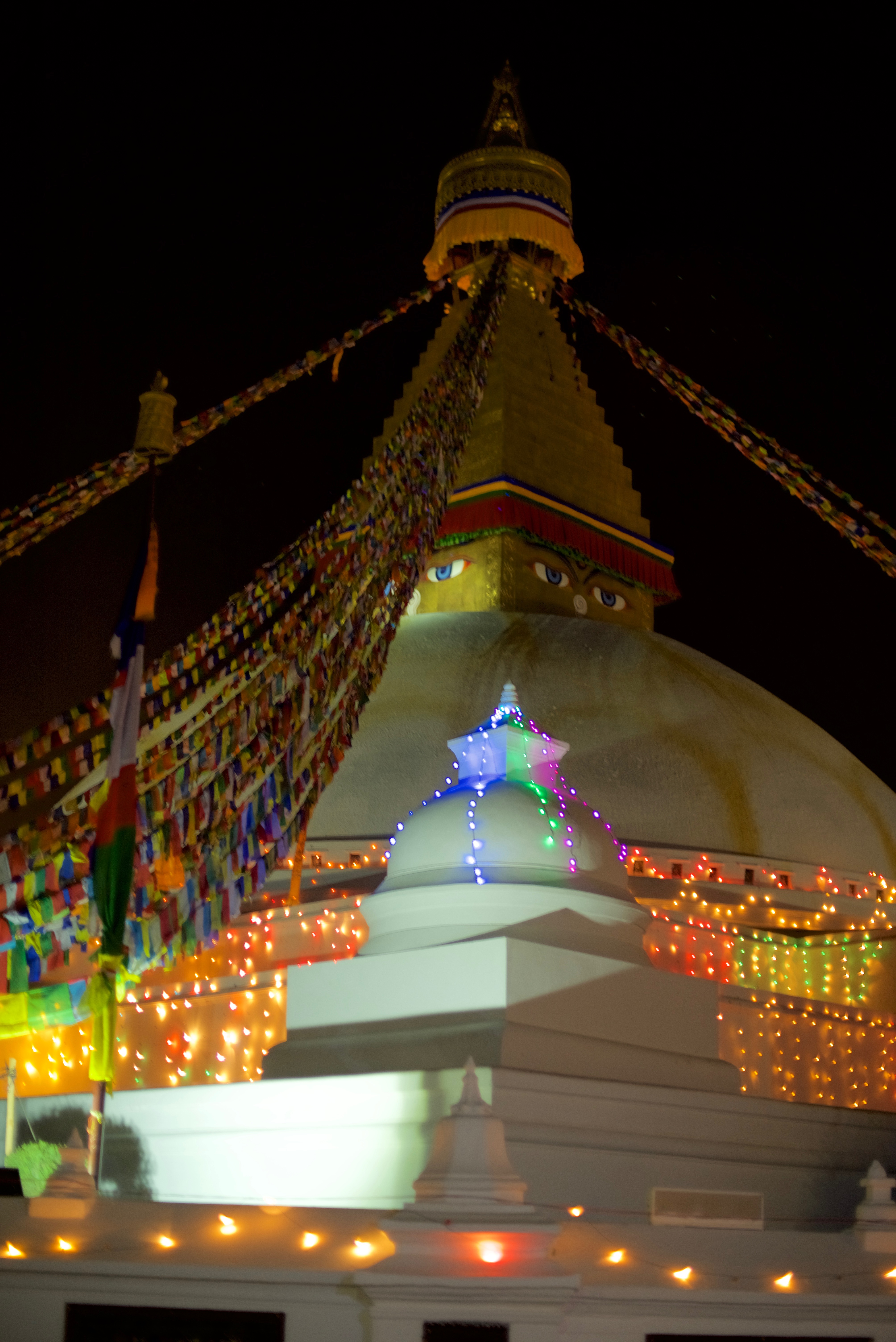
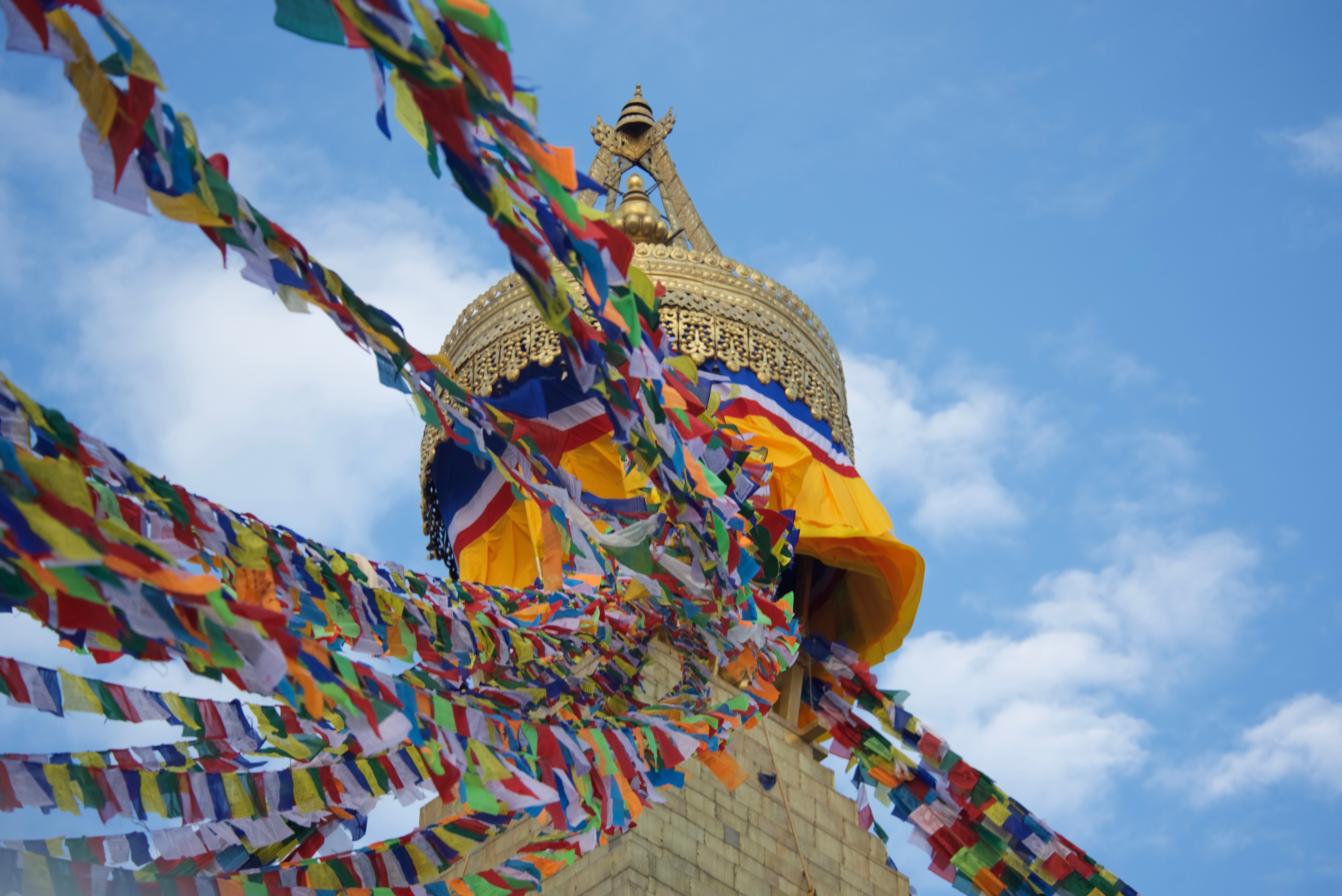
 I spent my Christmas in Boudhanath, Kathmandu. Joni is back in the USA spending time with her mom and sister Kay over the Holidays. I wanted to get out of the Monastery and experience some different sights and sounds of Nepal. Boudhanath is full of interesting people, activities, sounds and smells. I appreciate it’s significance as place of pilgrimage and spiritual renewal. I feel at home there and a sense of peace, despite the intensity of the activity.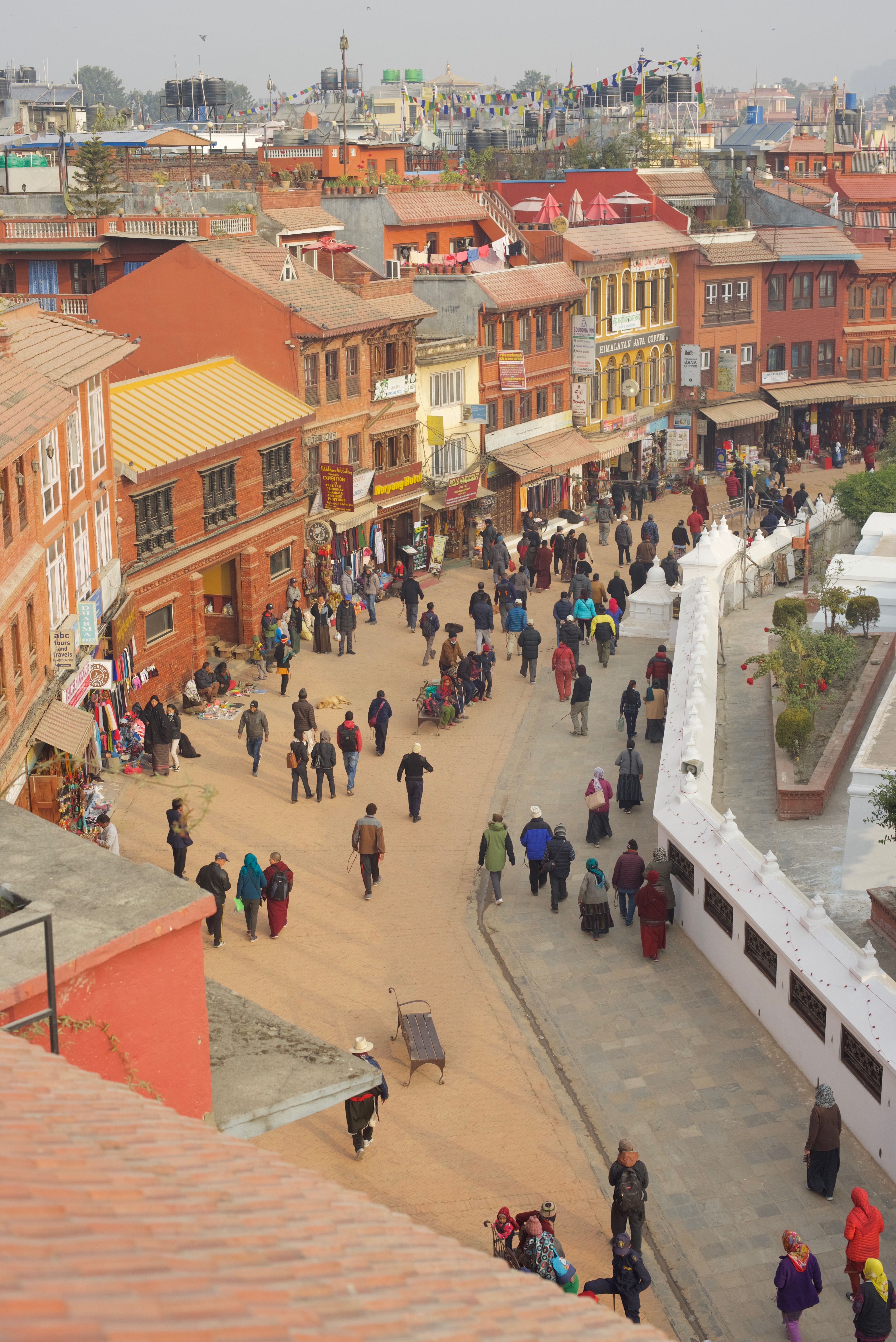
Tibetan merchants have rested and offered prayers in Boudha (short for Boudhanath) for many centuries. When refugees entered Nepal from Tibet in the 1950s, many decided to live around Boudhanath so there are many Tibetans in the neighborhood. The Stupa is said to entomb the remains of the Kassapa Buddha.
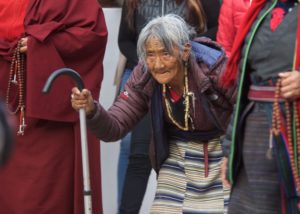
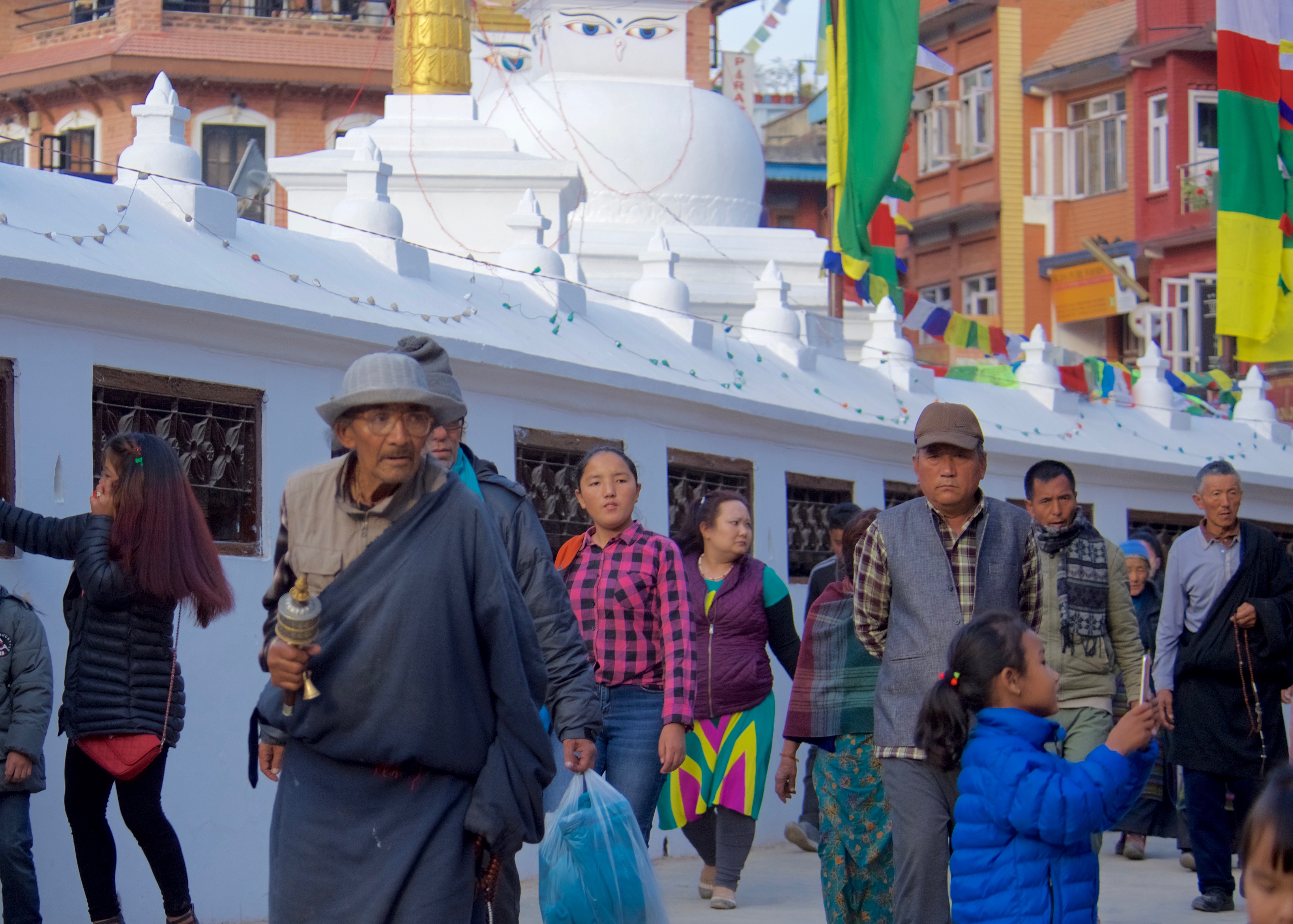 During my 4 days in Boudha, I took a few hours each day to do Chora; circumambulating the Stupa and reciting prayers. Accompanying me round the Stupa were hundreds of fellow Buddhists; walking at various speeds. Some make it round with the aide of a relative, crutches or wheelchairs. Some wear running suits. For some, it appears to be their daily spiritual and physical workout. I saw many familiar faces as I returned at the same time each day. The flow of humanity around the Stupa reflects the diversity of the ethnic groups of Kathmandu and their temperaments.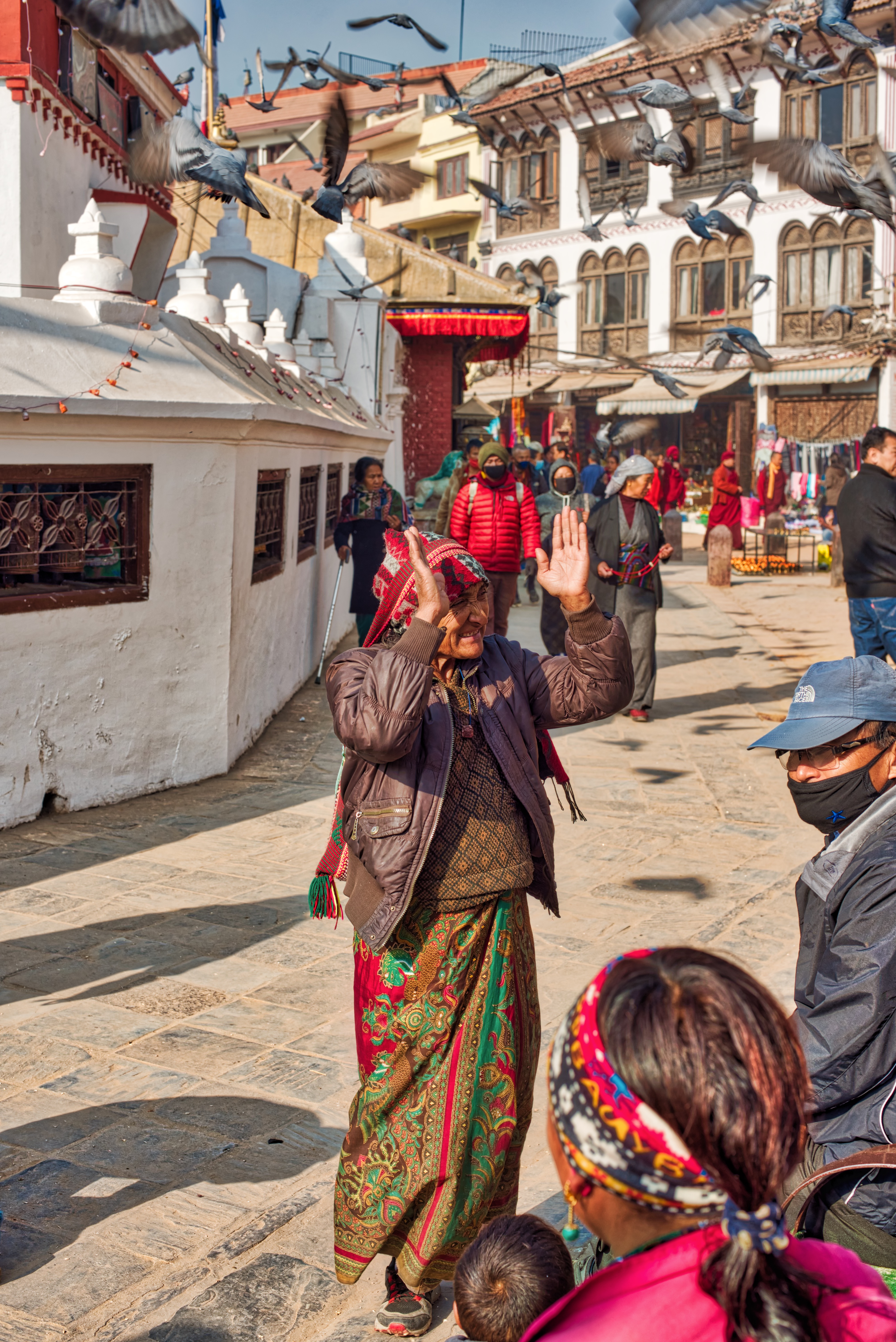
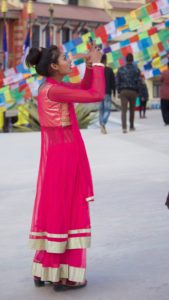
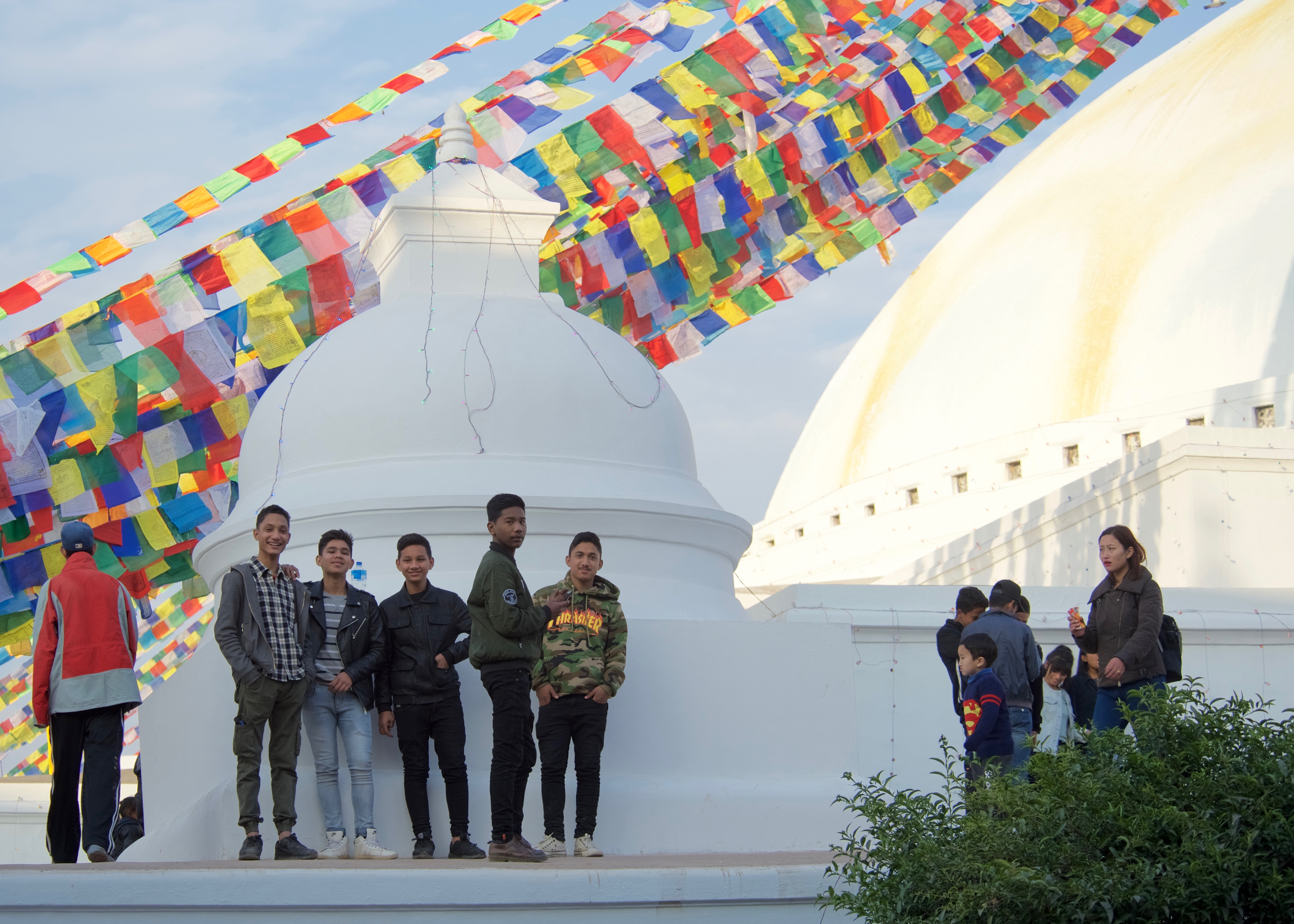 Teenagers come with their smart phones and selfie sticks to join the throng, stopping in the middle of the flow, with little deference to the significance of the place. The elderly also take time socialize from time to time but do so as they walk or when they retreat to the sideline benches, looking into the stream.
 They are the blind, disabled, poor and elderly. Standing outside the moving ring, they plead for money and food. Aid groups appear at times to distribute food in an organized fashion while people going round also randomly stop and offer money. While I don’t understand the organization and timing of it all, there are friendly security people who patrol the grounds with sticks and whistles and periodically nudge the beggars from their locations. In this way, the begging is embraced, but regulated in a fashion.
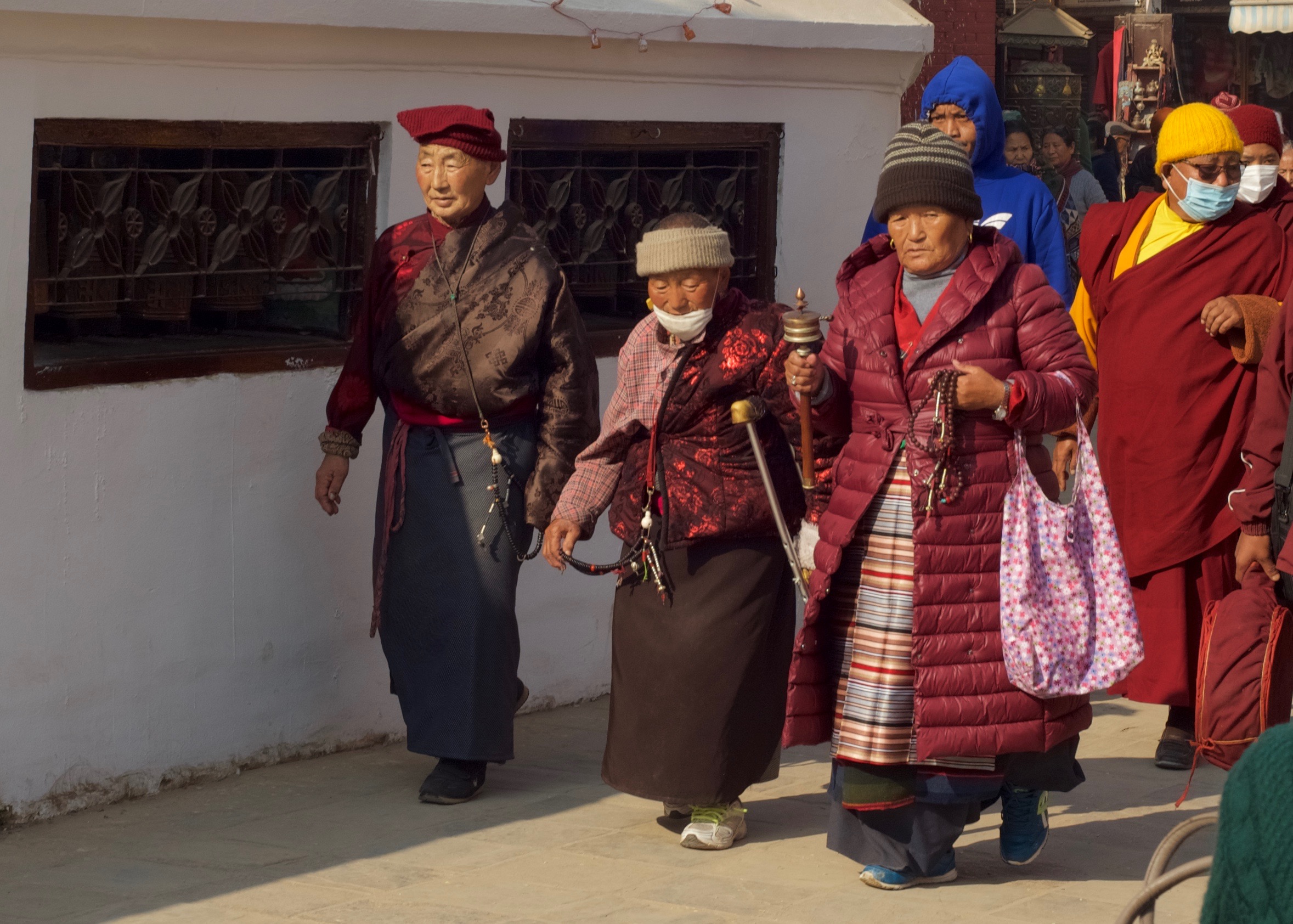 Further outside the ring of devotion are shops selling religious object; thankas, and other paintings, prayer beads, statues, bells and the like. There are also many restaurants, hotels, and coffee shops. These layers of commerce, social welfare, gawking tourists and religious practice seem to fold naturally with one another. All move in the same clockwise fashion.
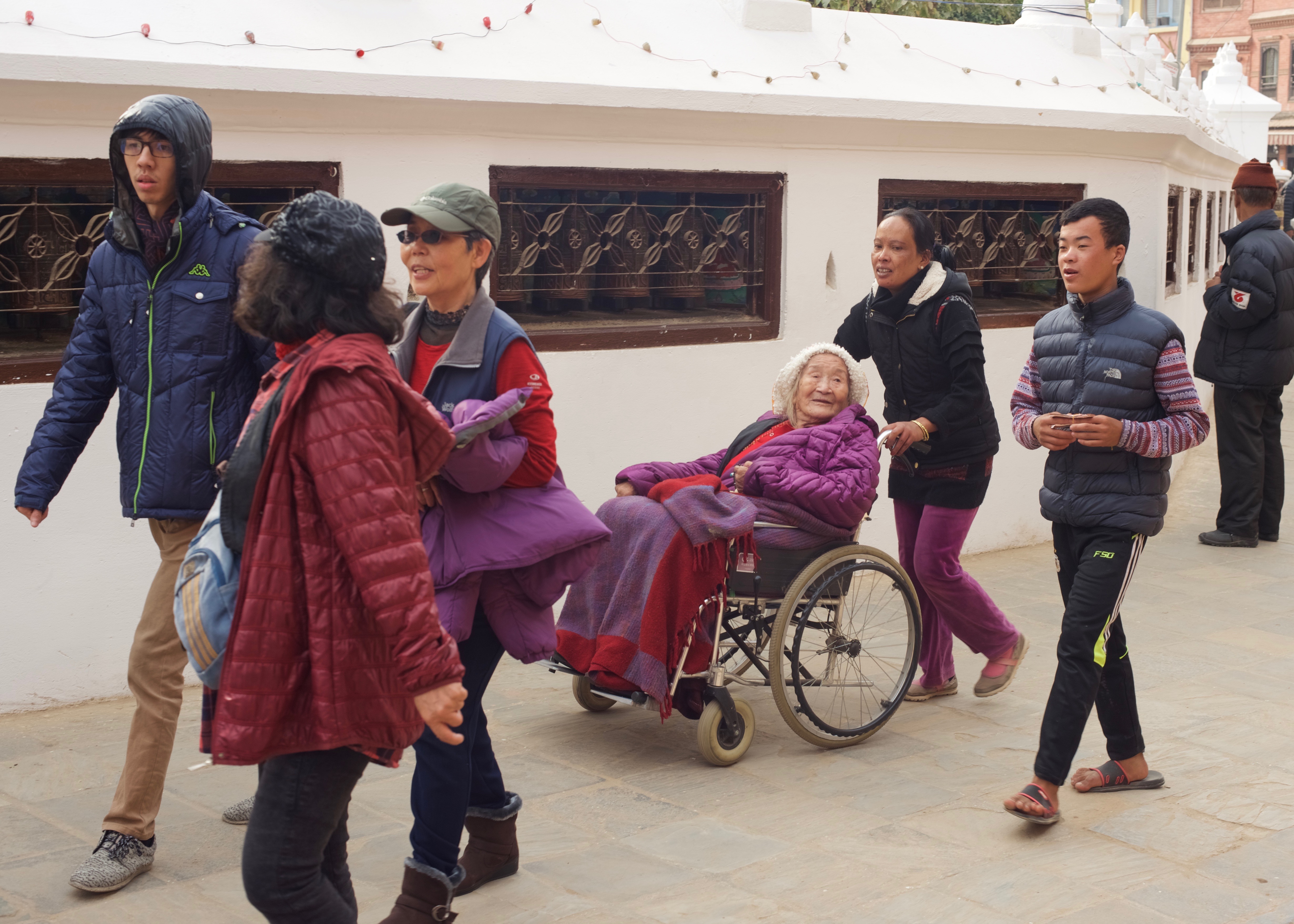 After a time, moving with the throng, I settled into the flow and got a feeling of camaraderie with my fellow travelers. It was a little like being in street traffic here in Kathmandu, speeding up, slowing down, dodging and dancing with the variable speed of my fellow dancers. The practicalities of moving with so many people is a metaphor for our interactions in daily life, coping with interruptions, unexpected turns, diverse personalities and temperaments. The “flow” isn’t always tranquil though over time enjoyed the rhythm of it. Transcending all the activity, chaos and the push of it all, is the recognition that we are all here for the same purpose; to wish for the happiness and enlightenment of all sentient beings. There’s no other highway like it anywhere in the world.